
Mashuuru Water Project
It All Begins Here
Curiosity as the Compass
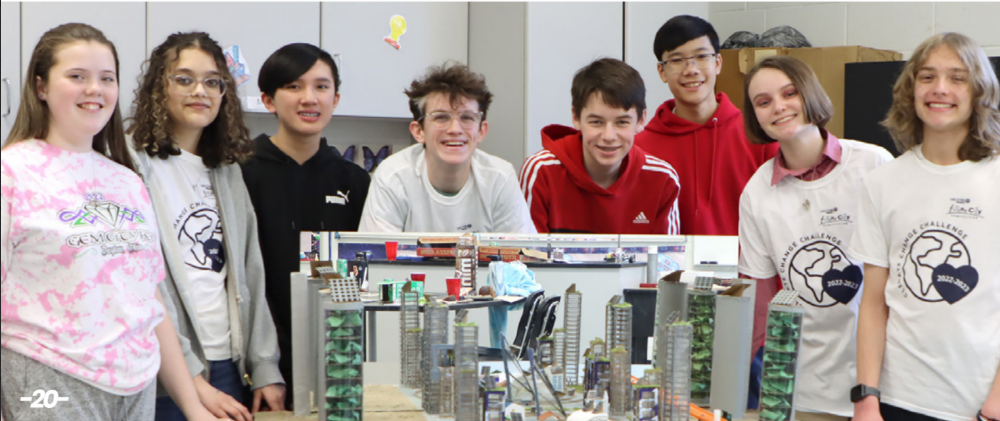
When Tina's eighth grade students first gathered for Future City, most of them barely knew each other. They were shy and a little hesitant about what lay ahead. But then something simple, yet profound happened that changed the whole trajectory: we asked them what they were curious about. One spoke about girls’ rights and education, another about medicine because his father served as a doctor, another was interested in pursuing music. Instead of being told what boxes to fill in for a competition, they were asked what they cared about - what lit them up. That changed everything.
Through the leadership and coaching of Kavita Tanna and Thompson Morrison using the Designed inGenuity learning framework, they realized they could design a city in alignment with their own passions and the pieces of the world that already mattered to them. Tina and I watched as that spark of intrinsic motivation ignited in them. We simply fanned the flame and tended the fire — what started as a project became personal. Suddenly, they weren’t researching abstract topics; they were connecting their curiosities to the real needs of a community.
The shift was powerful: when learning comes from within, students stop working for approval and start working with purpose. These eighth graders found joy in complexity because their own questions carried them forward. As an educator, I was struck again by how little it takes to unlock intrinsic motivation. We always talk about empathy, but in this case, connection didn’t begin with empathy exercises — it began with curiosity. That’s all it took for them to work harder and care deeper, not because we asked them to, but because they asked it of themselves.
The Power of Purpose at 7AM
I honestly felt a bit cynical when the kids first tried to schedule time to collaborate with Kavita and the community in Kenya. With so many time zones to juggle, the only meeting slot that worked was 7AM. Inwardly, I thought that time would be unlikely to work. Tina and I sat back and listened to their discussion as they worked to figure it out, "What about Thursday?" one suggested. That wouldn't work because of bus transit on school mornings. Another one suggested 7 am on Saturday. I thought, “There’s no way teenagers will choose that,” and my assumption was affirmed as there were a cacophony of reasons why Saturday was out.
But then Maya suggested Sunday morning. Tina and I watched in amazement as each one agreed without hesitation.
Sunday arrived and we all logged in. They didn’t complain about waking early or about losing their weekend sleep. One even joined from the lobby of her Irish dance performance venue, dressed in glittering costume, and her hair up in braids determined not to miss the call. Their families drifted in too, supporting them quietly with coffee mugs in hand. It was extraordinary.
Why were they so willing? Not because of points or grades. They showed up because they knew their voices mattered, and that this call with people halfway across the world couldn’t happen without them. That morning taught me something I’ll never forget: when young people believe their work matters, when they feel purpose, they will do the hard things joyfully. We so often underestimate their willingness to rise to responsibility, but purpose makes the difference.
And that Sunday morning, I watched tired adolescents light up simply because they were part of something real.
Beyond Competition
At the beginning, the motivation for Future City sounded familiar. The students wanted to compete and to win. They thought a victory would look good on résumés and high school applications. But the deeper they journeyed into the project, the more they uncovered about communities struggling without reliable water access.
The focus began to shift before our eyes. They researched water systems, irrigation, and public health. They met expert hydrologists, agriculturists, public health specialists, Doctors and Engineers without Borders, architects, city planners, even a large-species migration specialist! They connected virtually and with people on the ground. Without realizing it, the desire to win didn’t feel like the real prize.
By the time they reached the final presentations, one student stood up before hundreds of industry experts, scientists, and student designers and named it out loud.
We started this project because we wanted to win a contest, but now we know our true purpose is actually to raise awareness for people who live without water security.
That moment broke me open. Tina and I sat in the front row of the auditorium with tears of pride and gratitude streaming down our faces. We had witnessed firsthand the remarkable transformation of altruism. The competition audience expected technical details, but what they received instead was conviction, responsibility, and truth.
These young people had outgrown the boundaries of the competition. They took second place in the formal judging, but in reality they had already won something more important: a new kind of purpose. They had discovered that learning isn’t complete when you reach a goalpost — it is complete when you realize who you are responsible to.
Ripples of Change
I thought the project might end when the competition ended, but I was wrong.
The students didn’t stop once the trophies were handed out; if anything, they leaned in even more. They created QR codes to gather support, presented at city council meetings, spoke at church gatherings, participated in arts festivals, even challenged people at community events to carry buckets of water and experience the weight themselves before donating to the cause.
Their voices carried beyond Westerville. They caught the attention of Rotary Clubs, of innovators working on water-from-air technologies, and of organizations in Kenya. One by one, adults began showing up, drawn by the authenticity of the students’ vision. These weren’t symbolic projects anymore — they were catalytic.
What started in one classroom grew into a movement that crossed cities, continents, and institutions. It has inspired international grants, partnerships, and best of all, before long thousands of people and giraffes will be gaining access to clean water.
I often think about how those young people’s curiosity became courage, and how their courage inspired adults to act. The experience reminded all of us that students don’t just learn in schools — they can transform the world from schools. That realization is perhaps the greatest ripple this work has created, and the waves are still moving outward.